
 A strategic playbook for designing intelligent travel operations with AI


In travel businesses, the focus is often placed on generating more enquiries and improving final conversion rates. Yet, between these two points lies a critical stage that quietly determines success or failure – the period after an enquiry is received but before it becomes a confirmed booking. This is where many potential bookings are either strengthened through timely engagement or lost due to delays, fragmented communication, and lack of visibility.
This stage is often referred to as the follow-up gap. It is not a single breakdown in process, but a combination of small inefficiencies that accumulate across the enquiry journey. While demand may be strong, conversion often depends less on volume and more on how effectively each enquiry is handled in those crucial early interactions.
Where the Follow-Up Gap Begins
The follow-up gap begins the moment an enquiry enters the business. In most travel organisations, enquiries arrive through multiple channels such as website forms, emails, WhatsApp messages, phone calls, and agent networks. While this multi-channel inflow reflects strong demand, it also creates fragmentation when these enquiries are not brought into a single structured system.
Without centralised visibility, it becomes difficult to track ownership, response timing, or enquiry status. Teams often rely on inboxes or spreadsheets, which leads to inconsistency in handling and delays in initial response. This is where structured enquiry management becomes essential, ensuring that every lead is captured, assigned, and tracked in one place rather than being scattered across multiple touchpoints through enquiry management.
Loss of Customer Context Across the Journey
Even when enquiries are recorded, maintaining continuity becomes another challenge. Travel decisions are rarely made in a single interaction. Customers may revisit their plans multiple times, request changes, or compare alternatives before confirming. However, when customer information is spread across disconnected systems, this continuity breaks.
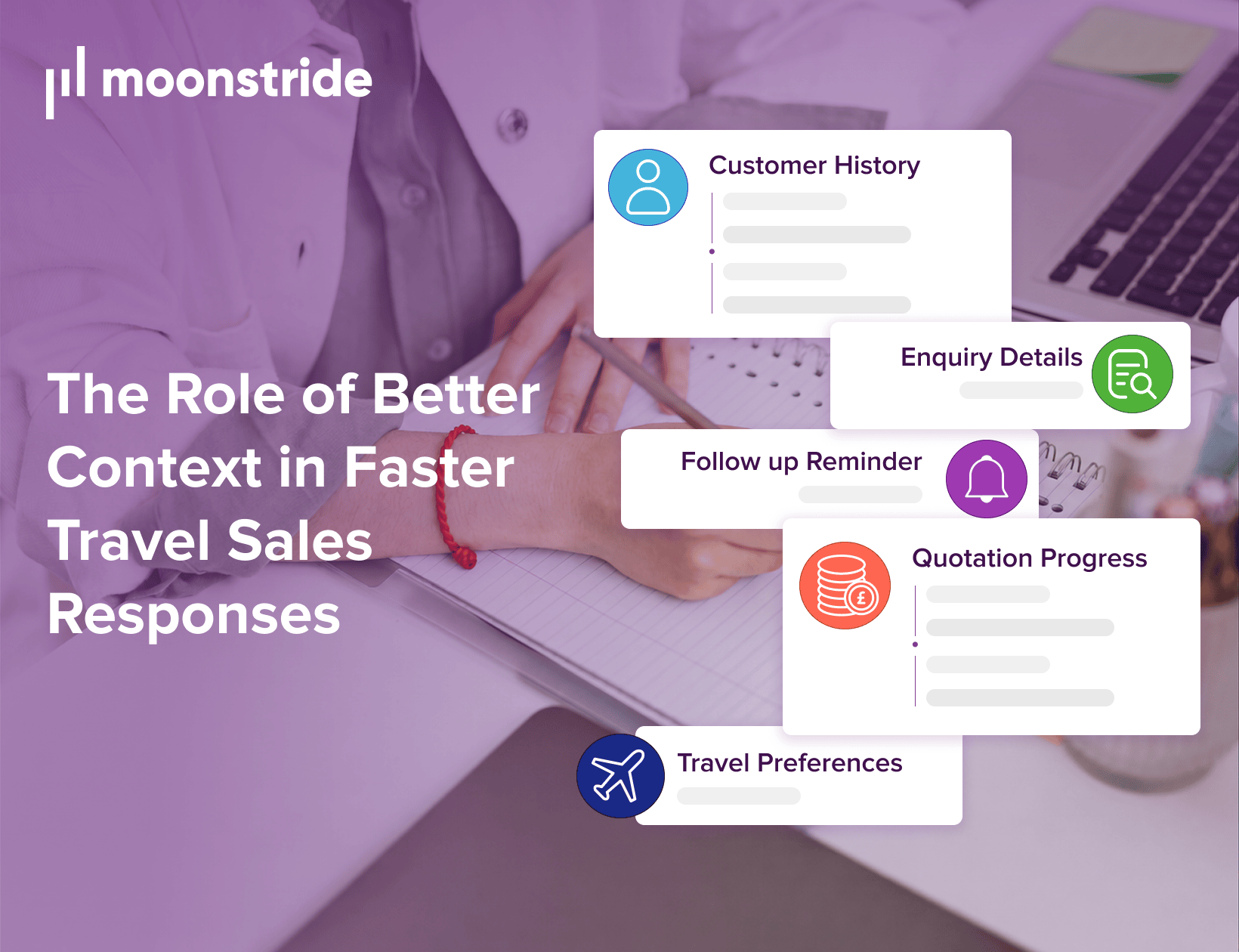
As a result, teams often end up repeating questions, missing prior preferences, or responding without full context. This affects not only efficiency but also the quality of engagement. A connected travel CRM with strong customer profiling ensures that every interaction builds on the customer profiling, where communication history, preferences, and past enquiries are maintained in one place.
Quotation Delays that Slow Down Conversion
Once an enquiry is understood, the next step is typically quotation. This is often one of the most time-sensitive stages, yet it is also where delays frequently occur. In many travel businesses, quotation creation involves coordination between sales and operations teams, manual checking of availability, and assembling pricing from multiple sources.
These dependencies slow down response times, extending the follow-up gap at a critical decision-making moment. While internal teams are preparing a response, customers are often evaluating alternatives elsewhere.
A structured quotation process helps reduce this delay by standardising how proposals are created and shared through a quotation builder, enabling faster, more consistent travel quotes and reducing turnaround time significantly.
The Role of Itinerary Presentation in Driving Decisions
Beyond pricing, customers also need clarity on what they are actually booking. This is where itinerary presentation plays an important role in the decision-making process. However, in many cases, itineraries are either too basic or take too long to prepare, reducing their impact during the follow-up stage.
When itineraries are structured clearly and presented in a visually engaging format, they help customers better understand the value of the offering. A connected itinerary builder allows travel teams to create tailored travel plans alongside quotations through the tour itinerary builder, ensuring that both pricing and experience are communicated together.
Operational Fragmentation Behind Missed Follow-Ups
While customer-facing delays are visible, many of the underlying issues exist internally. Sales teams often manage multiple enquiries simultaneously while coordinating with operations, suppliers, and finance teams. Without clear ownership or structured task management, follow-ups can easily be missed or delayed.
This lack of coordination creates gaps in communication and slows down decision-making. When follow-ups depend on manual reminders or individual tracking methods, consistency becomes difficult to maintain.
Structured task assignment and automated notifications help address this through notifications & task management, ensuring every action is assigned, tracked, and followed up within defined timelines.
Communication Gaps that Reduce Conversion Efficiency
Another major challenge is fragmented communication. Customer interactions often take place across multiple channels, including email, calls, and messaging platforms. When these are not centrally recorded, teams lose visibility of the full conversation history.
This can lead to inconsistent messaging, repeated questions, or even conflicting responses. From a customer perspective, this reduces confidence and slows down decision-making.
A unified CRM system helps eliminate this issue through CRM communication tracking, ensuring that all interactions are captured in one place and accessible across teams.
Limited Visibility Across the Sales Pipeline
Even when enquiries are actively being managed, a lack of visibility across the pipeline creates another layer of inefficiency. Without real time insight into where each enquiry stands, whether it is awaiting a quote, under negotiation, or close to confirmation, teams struggle to prioritise effectively.
This also makes it difficult to identify where enquiries are being lost. Whether delays are occurring at the quotation stage, during follow-ups, or at the decision stage often remains unclear without structured reporting.
With pipeline visibility and reporting through dashboards & reporting, travel businesses can track conversion stages more effectively and identify bottlenecks in the journey.
From Lost Enquiries to Predictable Conversions
The real impact lies in the shift from lost enquiries to predictable conversions. When follow-ups are unstructured, enquiries quickly lose momentum due to delayed responses, inconsistent communication, and unclear next steps. As engagement weakens, internal teams also struggle with limited visibility and coordination, leading to missed follow-ups and lower conversion rates despite strong enquiry volumes.
When brought into a structured, connected system, the entire dynamic changes. Enquiries move through a defined pipeline with faster responses and more consistent communication. With centralised access to customer information, quotation tools, itinerary builders, and pipeline visibility, teams can manage follow-ups with greater control and confidence.
Closing the follow-up gap requires this connected approach across the enquiry-to-booking journey. When enquiry handling, quoting, customer context, follow-ups, and reporting sit within a single system, travel businesses shift from fragmented activity to a more predictable sales process.
Ultimately, this is not just an operational issue but a revenue opportunity. Bringing structure and visibility to follow-ups helps improve conversions without increasing lead volume. If your business is losing enquiries between initial interest and confirmed booking, moonstride can help bring clarity and consistency to your enquiry-to-booking process. Book a demo now.
Share on



Write a Comment
Leave a reply
Your email address will not be published. Required fields are marked *