
 A strategic playbook for designing intelligent travel operations with AI


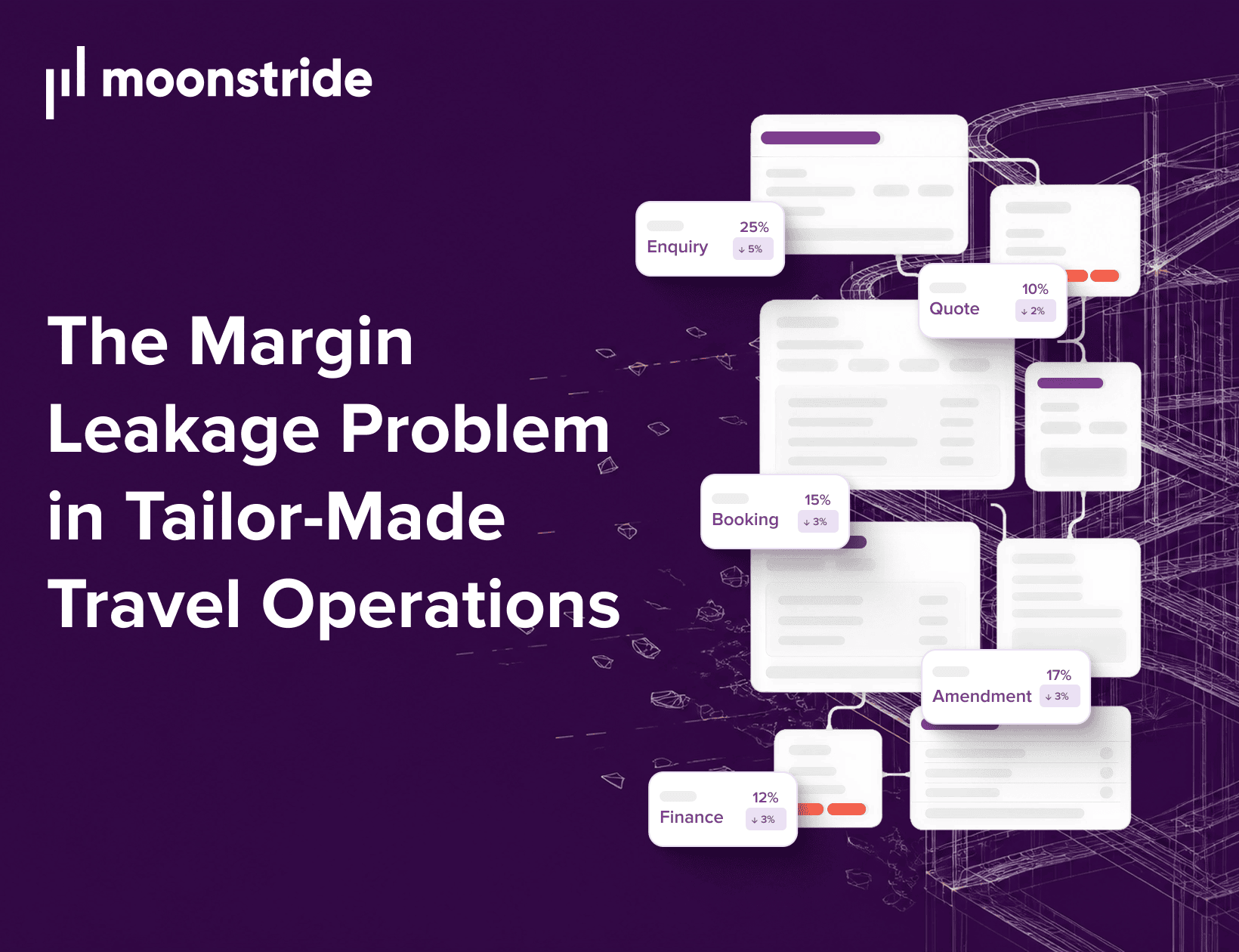
A booking can look successful at every stage of the customer journey and still deliver less profit than expected. The enquiry converts, the itinerary is approved, suppliers are confirmed and the traveller departs exactly as planned. Yet somewhere between the first quote and the final reconciliation, margin has started to erode. The price was adjusted to secure the sale. An amendment changed supplier costs. An upgrade was added without a full pricing review. A currency movement affected the final cost. None of these decisions appear significant in isolation, but together they can quietly reduce profitability across hundreds of bookings. For travel businesses managing customised itineraries, this type of margin leakage is often one of the most difficult commercial issues to identify because it develops gradually within normal day-to-day operations.
Why Custom Travel Programmes Create More Commercial Complexity
Bespoke travel is commercially attractive because it allows travel businesses to create higher-value, personalised journeys. But the same flexibility that makes these trips appealing also makes margin harder to protect.
A fixed package has defined components, pricing logic and limited variation. A custom itinerary may include several hotels, transfers, activities, tours, guides, internal flights, upgrades, service fees and destination-specific extras. Each component may come from a different supplier, in a different currency, with different payment terms and cancellation rules. That complexity creates more room for commercial drift.
A consultant may adjust a hotel rate to keep the quote competitive. A transfer supplement may be added after the initial proposal. A supplier may revise the cost after availability is confirmed. A client may request a change that increases operational effort but does not trigger a corresponding price review.
None of these moments feel like margin leakage at the time. They feel like normal travel operations. That is the problem.
Where Margin Starts to Disappear
Margin leakage usually begins before the booking is confirmed. At the quote stage, consultants are often balancing commercial judgement with customer expectations. Effective quotation management can help teams understand the commercial impact of pricing decisions before a proposal is sent. They want to present an attractive price, respond quickly and keep the enquiry moving. If supplier costs, markups and selling prices are managed across spreadsheets, emails and separate systems, the consultant may not have a clean view of the true margin while building the proposal.
A small manual change can make the quote more appealing but reduce profitability. A copied rate may be slightly outdated. A markup may be applied differently across services. A discount may be offered without visibility of the margin impact across the full itinerary. Once the quote becomes a booking, those early decisions carry forward.
The problem then expands through amendments. Complex bookings rarely remain static. Dates change. Room types change. Travellers add experiences. Transfers move. Suppliers update availability. Each change should trigger a margin check, but in many travel businesses, amendments are handled operationally rather than commercially. The booking is updated. The margin is not always reviewed.
The Hidden Cost of Manual Pricing
Manual pricing is often treated as a normal part of tailor-made travel. Experienced consultants know their destinations, suppliers and customers. They know when a price needs to move. They know how to shape an itinerary around a budget.
That expertise is valuable. But when it sits outside a controlled pricing structure, it becomes difficult to measure and manage.
A consultant may apply a fixed markup to one service, a percentage markup to another and a manual adjustment to a third. Another consultant may price the same combination differently. One may include a supplement as part of the package price. Another may leave it out to be added later. One may factor in currency movement. Another may use the rate already sitting in the spreadsheet.
Across a handful of bookings, this may feel manageable. Across hundreds of personalised journeys, the difference becomes material.
Margin leakage is rarely caused by people making careless decisions. It is usually caused by capable people working without connected pricing controls, live supplier costs and clear commercial visibility at the point where decisions are being made.
Supplier Costs, Currency and Timing
Supplier cost changes are another major source of margin leakage. Custom itineraries often depend on live or semi-live supplier arrangements. A hotel rate may change between enquiry and confirmation. A transfer supplier may quote a different rate for a revised pickup time. An activity provider may apply a minimum group charge. A local supplier may confirm in one currency while the customer is quoted in another.
If these costs are updated manually, the risk sits in the gap between the supplier change and the customer-facing quote or booking record.
Currency adds another layer. A small exchange rate movement may not seem significant on one component. But across hotels, transfers, excursions and destination services, it can reduce margin quietly. Without multi-currency handling connected to booking finance, teams may only see the impact after reconciliation. By then, the sale has already been made.
Amendments Are Commercial Events, Not Just Operational Changes
In bespoke travel operations, amendments are often an expected part of the customer experience. Clients expect flexibility. Good travel teams are used to responding quickly and keeping the experience smooth.
But every amendment has a commercial effect. Changing a hotel may alter the net cost. Moving a date may shift the booking into a different season. Adding a private guide may require supplier confirmation, additional coordination and revised documents. Reducing the number of travellers may affect per-person pricing. Upgrading a room may change both supplier cost and customer price.
If the amendment is handled only as an operational update, the margin can move without anyone formally reviewing it.
This is where leakage becomes especially difficult to spot. The booking still looks correct. The itinerary is updated. The supplier is confirmed. The traveller receives the revised documents.
But the commercial position may have changed.
Travel businesses that manage amendments well treat them as commercial checkpoints. Every meaningful change should make the team ask: has the cost changed, has the selling price changed, and is the margin still where it needs to be?
Why Month-End Reporting Often Finds the Problem Too Late
Many travel businesses only discover margin leakage during finance checks, reconciliation or end-of-month reporting. At that stage, the information is useful but late. The booking has already travelled through enquiry, quote, confirmation, supplier communication, documentation and invoicing. The customer price may be fixed. The supplier cost may already be committed. The opportunity to correct the margin has usually passed.
This is why margin leakage should not be treated only as a finance issue. Finance may identify the gap, but the gap is created earlier in the operational process. It starts when the quote is built, when a rate is selected, when a discount is applied, when a supplier cost changes, when an amendment is processed, or when a payment term is missed. The margin needs to be visible where those decisions happen.
What Better Margin Control Looks Like
Better margin control does not require removing flexibility from consultants who build personalised travel programmes. It means giving them the right commercial visibility while they build and manage each itinerary.
A consultant should be able to see the impact of pricing decisions while creating the quote, not after the booking is reconciled. Supplier costs and customer-facing prices should sit in the same connected record. Markup rules should be applied consistently across service types, while still allowing authorised users to make controlled adjustments where needed.
When a booking changes, the margin should be reviewed as part of the amendment process. When supplier costs move, the booking record should reflect the change clearly. When payments, invoices and supplier charges are managed, finance should be working from the same data that sales and operations used earlier in the journey.
That is the difference between margin being reconstructed after the event and margin being managed as the booking develops.
What Connected Commercial Visibility Looks Like in Practice
The travel businesses that protect margin most effectively are rarely the ones with the most complex spreadsheets or the most experienced individuals managing pricing manually. They are the businesses that have connected their commercial processes to their operational workflows.
When an enquiry becomes a quotation, supplier costs should already be available. When a quotation becomes a booking, pricing assumptions should move with it. When a booking changes, the commercial impact should be visible immediately. When finance reviews performance, the numbers should come directly from the booking lifecycle rather than being reconstructed afterwards.
This is particularly important for itinerary-led travel, where profitability is influenced by hundreds of small decisions across sales, operations, supplier management and finance. Without connected visibility, each team sees part of the picture. With connected visibility, everyone works from the same commercial reality.
How moonstride Helps Travel Businesses Protect Margin
moonstride is designed to connect the areas where margin leakage most commonly occurs. Enquiries, quotations, bookings, supplier management, contract loading, financial tracking and reporting operate within a connected travel platform, helping teams manage the full booking lifecycle from a single source of information.
During the quotation stage, travel consultants can build itineraries using supplier costs and pricing structures already configured within the platform. Contract loading supports the management of negotiated supplier rates, while the Pricing Manager helps travel businesses apply structured markup strategies across products, services, suppliers and markets.
As bookings progress, supplier costs, customer pricing and booking changes remain connected to the same record. Amendments can be reviewed against the existing commercial position rather than being managed in isolation. Multi-currency capabilities help businesses operating across international suppliers and destinations maintain visibility of costs and selling prices throughout the booking journey. Sanity checks can be applied.
From a management perspective, moonstride’s Dashboard and Reporting Suite provide visibility across booking performance, revenue, supplier costs and margins, helping teams identify trends and investigate commercial issues before they become month-end surprises.
Because quotations, bookings, contract loading, supplier management, finance and reporting are connected, margin becomes easier to monitor throughout the booking lifecycle rather than only after reconciliation.
The Margin You Keep Matters as Much as the Revenue You Win
Travel businesses are often focused on winning the enquiry. That is understandable. The sales process is competitive; customer expectations are high and the work involved in building a strong proposal is significant.
But revenue alone does not tell the full story. A booking can look successful and still underperform commercially. A consultant can close a high-value itinerary while the margin quietly erodes through small changes that nobody has time to track. A business can grow booking volume while profitability becomes harder to explain.
Margin leakage rarely arrives as a major commercial failure. More often, it appears as dozens of small decisions spread across enquiries, quotations, supplier negotiations, amendments and financial processing. Individually they seem insignificant. Collectively they can have a meaningful impact on profitability.
Travel businesses that can see those movements as they happen are far better positioned to protect margin, price confidently and grow sustainably. For businesses managing complex itineraries and multiple supplier relationships, maintaining commercial visibility throughout the booking lifecycle is becoming just as important as winning the booking itself.
Explore how moonstride’s Quotation, Contract Loading, Supplier Management, Pricing Manager, Multi-Currency, Dashboard and Reporting capabilities help travel businesses maintain greater commercial visibility across tailor-made travel operations.
Share on



Write a Comment
Leave a reply
Your email address will not be published. Required fields are marked *