
 A strategic playbook for designing intelligent travel operations with AI


Responding quickly to travel enquiries matters, particularly when customers are comparing several options or working towards fixed travel dates. However, speed alone does not make a response useful. A rushed reply that lacks relevant information can create more questions, prolong the conversation and reduce customer confidence.
Slow responses are not always caused by a lack of urgency from sales consultants. Time is often lost searching through inboxes, spreadsheets, customer records and supplier information before a meaningful reply can be prepared.
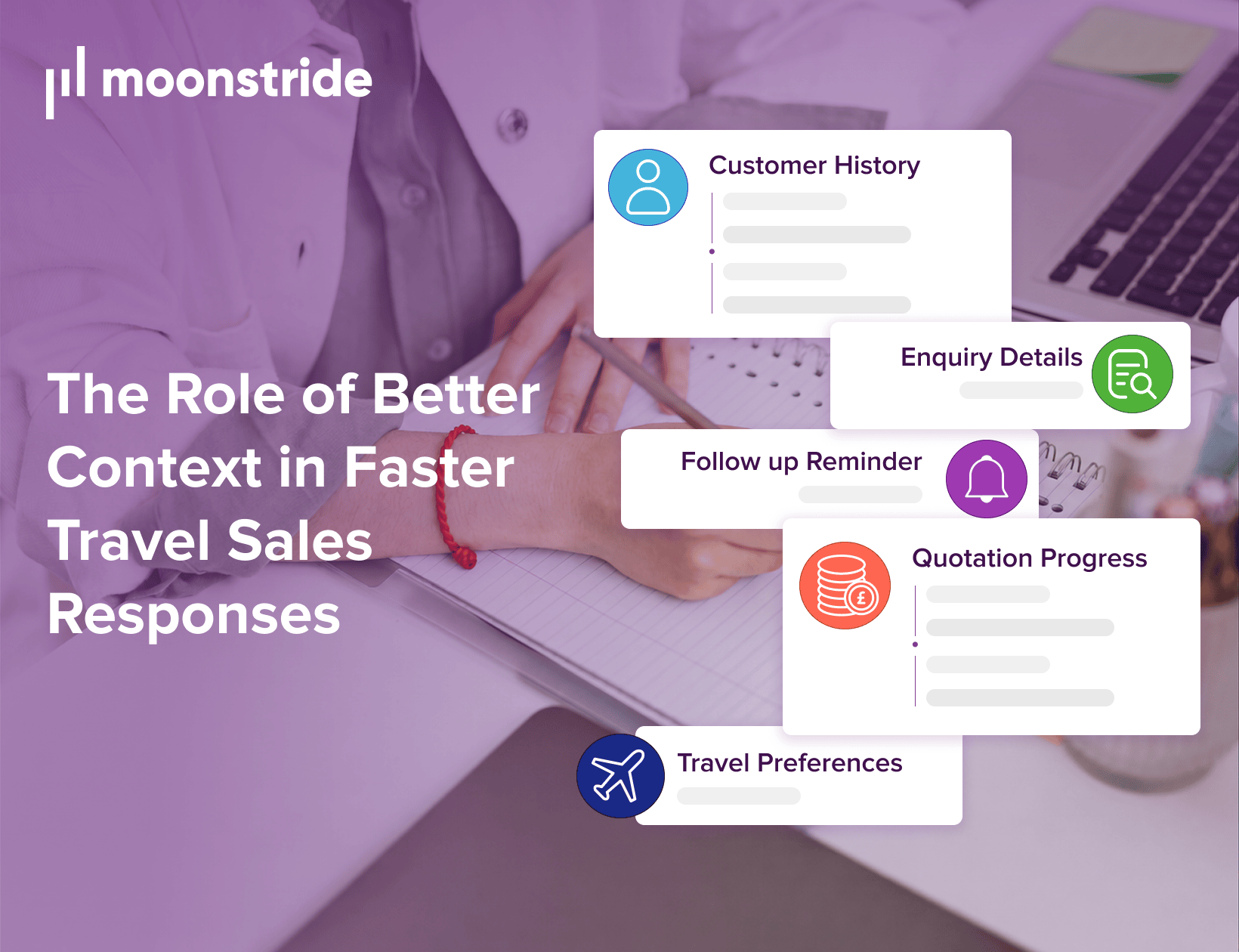
Faster responses begin with better context. When customer history, enquiry details, previous conversations, quotation progress and next actions are readily available, consultants can spend less time gathering information and more time moving the opportunity forward.
1. Bring Customer and Enquiry Information into One View
A consultant should not need to search across several systems to understand who the customer is and what they have requested.
Keeping the core information together gives the sales team an immediate view of:
- Customer and traveller details
- Preferred destinations and travel dates
- Budget expectations
- Enquiry source and submission date
- Assigned consultant
- Current sales status
This information gives the consultant a reliable starting point before preparing a response. It also reduces the risk of important requirements being overlooked when an enquiry contains several destinations, travellers or services.
Once the core enquiry details are visible, the next requirement is a complete record of what has already been discussed.
2. Keep Every Conversation Connected to the Enquiry
Customer communication may take place through email, telephone calls, website forms or messaging channels. When these conversations remain in separate locations, consultants may miss an update or ask for information the customer has already supplied.
Connecting correspondence to the relevant enquiry enables the team to review previous questions, responses, objections and commitments before replying. Email centralisation also gives colleagues access to the conversation when the original consultant is unavailable.
The customer receives a more consistent response, while the travel consultant can continue the discussion without reconstructing its history. That history becomes even more valuable when it contributes to a lasting customer profile.
Conversation history explains what has already been discussed, while recorded customer preferences provide the longer-term context needed for more relevant recommendations.
3. Record Customer Preferences for Future Responses
Each interaction provides information that may improve the next recommendation. Recording these details means consultants do not need to begin every enquiry with the same questions.
Useful customer context may include:
- Preferred departure airports
- Accommodation and room preferences
- Meal or accessibility requirements
- Typical budget range
- Previous destinations and booking types
- Traveller relationships
- Interests or special occasions
A central customer management record gives consultants relevant context when the same traveller returns. Responses can then reflect previous choices while still confirming that the requirements remain current.
Having this customer context available saves time, but consultants still need a clear way to identify which enquiries require attention first.
4. Use Clear Enquiry Statuses to Identify What Needs Attention
Without defined sales stages, consultants may need to open individual records, search through email threads or check with colleagues simply to understand whether an enquiry is new, awaiting traveller details, being quoted or ready for follow-up. As enquiry volumes increase, this lack of structure makes it harder to prioritise opportunities, maintain consistent response times and prevent promising requests from being overlooked.
Using moonstride’s tag feature, travel sales teams can label enquiries as New Enquiry, Information Required, Quotation in Progress, Quotation Sent, Follow-up Due or Booking Confirmed. These labels provide a clearer view of how each opportunity is progressing from the initial request to a confirmed booking.
Through enquiry management, consultants can review the relevant tag alongside customer requirements, quotation activity and recent communication in one structured view. Sales managers can identify stalled enquiries, review pipeline progress and direct attention towards priority opportunities without examining every record individually.
Knowing where an enquiry sits is useful, but progress may still stall when ownership and the next required action are unclear.
5. Assign Ownership and Next Actions
Every active enquiry should have a named owner and a defined next step. Without this clarity, responses may be delayed because consultants assume someone else is handling the request.
Alongside ownership, the record should show:
- What action needs to happen next
- When the action is due
- Whether information is outstanding
- Any internal notes or dependencies
- Whether management input is required
Using task management to record and assign these actions reduces dependence on separate reminders and personal to-do lists.
Clear ownership determines who should respond. Prioritisation determines which opportunity should receive attention first.
6. Prioritise Enquiries by Urgency and Opportunity
Responding faster does not mean treating every enquiry identically. A customer travelling shortly, an active repeat client or a time-sensitive supplier option may require attention before a general request for future travel.
Sales teams can prioritise enquiries using factors such as:
- Proximity of the departure date
- Time since the last customer interaction
- Quotation or booking value
- Repeat-customer status
- Availability or pricing deadlines
- Current quotation stage
- Indications of strong buying intent
Prioritising the right opportunities improves workload planning, while reusing relevant customer and quotation details can further reduce preparation time.
7. Reuse Existing Customer and Quotation Details
Preparing every proposal from the beginning adds unnecessary work, particularly when the customer is requesting a revision or a similar itinerary.
Previous quotation versions, traveller details, itinerary elements and customer preferences provide a useful foundation for the next response. A quotation builder keeps this information available for review and amendment rather than leaving it scattered across documents.
Supplier rates, availability and booking conditions must still be checked before a revised proposal is sent. Reusing the structure should reduce duplication without replacing commercial checks.
Existing information provides a useful starting point, but consultants still need current supplier details before presenting accurate options.
8. Keep Supplier Information Readily Available
A sales response may depend on more than customer information. Consultants also need to confirm supplier rates, availability, cancellation terms, inclusions and alternative options before making an accurate recommendation.
When this information is held by another team member or within a separate spreadsheet, the response remains on hold until an update is received. Supplier profile management gives consultants a structured way to access relevant supplier details alongside quotation information, reducing unnecessary internal exchanges and making it easier to answer customer questions with confidence.
This commercial context should not remain with one individual, especially when another consultant may need to continue the enquiry. Access to supplier information supports faster responses, and shared records ensure that progress does not depend entirely on one consultant.
9. Make Team Handovers Easier
Enquiries do not always remain with the same person from first contact to confirmation. Annual leave, shift patterns and changing workloads may require a colleague to take over.
A useful handover record should show:
- What the customer requested
- What has already been discussed
- Which proposal was shared
- What information remains outstanding
- The latest customer response
- The next agreed action
Shared context enables another consultant to continue the conversation without repeating earlier work. It also means customers are less dependent on the availability of one person.
Clear handovers maintain continuity, while timely reminders ensure that the next action is completed when it matters.
10. Use Alerts and Reminders for Time-Sensitive Actions
During busy periods, even well-organised consultants can overlook a follow-up or deadline. Relevant reminders bring attention back to the enquiry at the point action is required.
Notifications may be useful when:
- A new enquiry is assigned
- The customer replies
- A quotation has not received a response
- A scheduled follow-up becomes due
- Supplier availability is about to expire
- A payment or departure deadline is approaching
The aim is not to generate an alert for every update. Notifications should direct attention towards activity that may affect the customer conversation or the likelihood of securing the booking.
Once timely action becomes more consistent, managers need to assess whether it is improving sales outcomes as well as speed.
11. Review Response Performance Alongside Sales Outcomes
Average response time is useful, but it should not be considered in isolation. A quick acknowledgement does not necessarily mean the customer received the information required to make a decision.
Managers should consider response performance alongside:
- Enquiry-to-booking conversion
- Quotation turnaround
- Follow-up completion
- Booking value and margin
- Lost-enquiry reasons
- Consultant workload
- Customer response rates
Reviewing these measures together shows whether quicker responses are also accurate, relevant and commercially effective.
Bringing these practices together requires customer, enquiry, communication and quotation information to remain accessible throughout the sales process.
Give Travel Sales Teams Better Context with moonstride
moonstride brings sales information into one working environment, giving consultants the context required from the first enquiry through to the confirmed booking.
Customer details, communication history, quotation progress, assigned actions and enquiry status remain available as the opportunity develops. Consultants can understand what the customer needs, review what has already happened and identify the next action without searching through disconnected records.
Travel managers also gain a clearer view of enquiry progress, consultant workloads and follow-up activity, enabling them to address delays before opportunities are lost. When this context is available throughout the sales process, faster responses become more informed, consistent and commercially valuable.
Respond Faster Without Losing Relevance
Faster sales responses do not come from asking consultants to work at greater speed. They come from removing the unnecessary searches, repeated questions and internal checks that delay a meaningful reply.
When customer history, enquiry details, previous conversations, quotation information and next actions are available in context, consultants can respond sooner while maintaining accuracy and personal relevance.
The result is not merely a quicker response. It is a better-informed conversation that gives the customer confidence and moves the enquiry towards a booking. The next enquiry should begin with context, not a search. Book a personalised demo to see how moonstride helps your sales team respond with relevance and move opportunities forward.
Share on



Write a Comment
Leave a reply
Your email address will not be published. Required fields are marked *