
 A strategic playbook for designing intelligent travel operations with AI


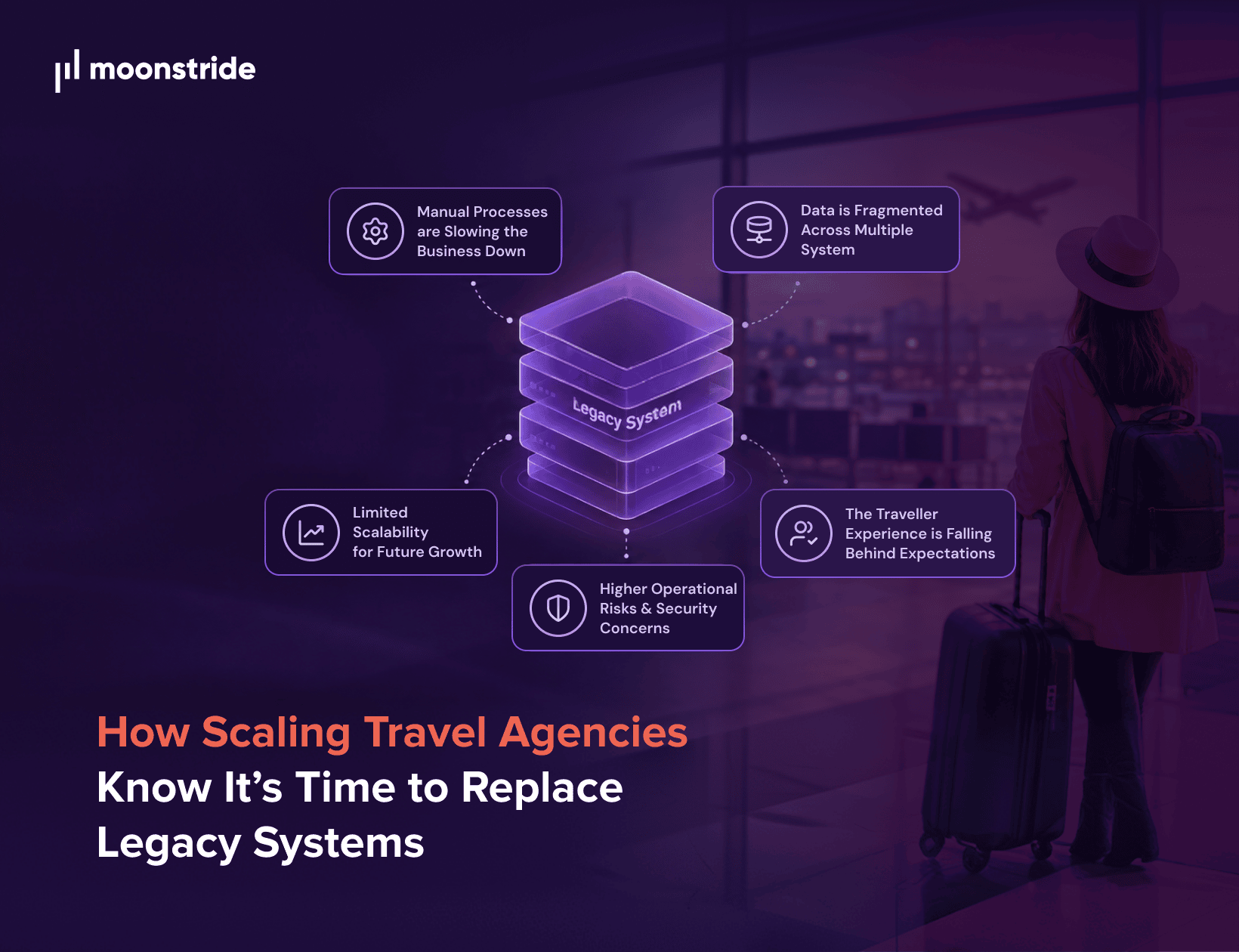
For many travel agencies, legacy systems are not replaced because they stop working overnight. In most cases, they continue supporting daily activities but gradually become harder to manage as operations expand.
A platform that worked well when managing fewer bookings, suppliers and customers may struggle when operations become more complex. New destinations, additional sales channels, larger teams and increasing traveller expectations all create new demands. The real question is not whether a system is old. The question is whether it still supports the way your travel agency operates today and where you want to take it tomorrow.
When teams spend more time managing processes than delivering exceptional journeys, it may be time to consider a change.
Manual Processes are Slowing the Business Down
Many growing travel agencies develop manual processes as booking volumes increase. These workarounds often solve immediate challenges but can become a barrier over time.
Repeated data entry, manual quotations, booking updates and document preparation can take valuable time away from sales, customer service and operational planning. These operational pressures often become noticeable in everyday tasks:
- The same information is entered into multiple systems
- Quotations require significant manual effort
- Teams manually prepare travel documents and updates
- Booking changes require several internal follow-ups
A modern travel platform enables sales, reservations and operations teams to manage enquiries, quotations, bookings and itineraries more efficiently. Such features help create a more integrated workflow from the first enquiry through to confirmed travel.
Reducing internal complexity also improves the experience delivered to travellers. Manual work is often only one part of the problem. The information supporting these processes may also be spread across several disconnected systems.
Data is Fragmented Across Multiple Systems
Travel agencies manage a wide range of information every day, including customer profiles, enquiries, quotations, bookings, supplier details, payments and travel documents.
When this information is spread across different platforms, teams often struggle to build a complete view of each traveller and booking. Fragmented information may be affecting operations when:
- Customer information is stored across multiple systems
- Teams spend time searching for booking updates or previous conversations
- Reports require manual data gathering and consolidation
- Different departments work with different versions of information
Disconnected data affects more than internal efficiency. It can also impact the traveller experience, as consultants and operations teams may not have the complete information needed to provide quick and personalised support.
A connected travel platform can bring enquiries, customer profiles, bookings, documentation and operational information together. moonstride brings CRM, enquiries, bookings, itineraries and back-office processes into one centralised platform, giving teams access to the information they need throughout the customer and booking journey.
When information is accessible in one place, teams can spend less time searching for details and more time supporting travellers.
However, connected information alone is not enough. The daily workflows around that information also need to work efficiently. When those workflows remain slow or inconsistent, the effect is often most visible in the service delivered to travellers.
The Traveller Experience is Falling Behind Expectations
Travellers today expect quick responses, customised recommendations and easy access to information throughout their journey.
When internal processes depend heavily on manual work or disconnected platforms, delivering this level of service consistently becomes more difficult. The effect on travellers may become clear through issues such as:
- Travellers wait too long for quotations or booking updates
- Teams cannot easily access previous preferences or interactions
- Personalisation depends on individual employee knowledge
- Customers have limited visibility after booking
A consistent traveller experience depends on connected workflows across sales, reservations, operations and customer service teams.
Features such as customer profiles, travel portals and mobile itinerary access help teams deliver clearer communication and better access to trip information. A travel itinerary builder also gives teams a clearer way to present daily plans, services, destination information and supporting travel documents.
But improving customer experiences requires more than customer-facing capabilities. This also requires technology that connects with the wider ecosystem they rely on every day.
Integrations are Becoming Difficult or Impossible
Modern travel agencies rarely operate using a single platform. They rely on connections with suppliers, payment providers, accounting platforms, CRM solutions, communication channels and other travel technology providers.
Older platforms can become restrictive when adding new connections requires significant development effort or ongoing technical support. Your existing technology may be restricting connectivity when:
- Connecting new platforms takes too long
- Existing integrations are difficult to maintain
- Teams manually transfer information between systems
- New supplier partnerships or services are delayed
A flexible technology foundation makes it easier to introduce new products, connect with suppliers, expand into new markets and respond more quickly to changing customer expectations.
moonstride provides travel technology integrations across areas such as payments, accounting, CRM, supplier connectivity, communication and itinerary solutions, helping to create a more connected operating environment. This greater level of connectivity also gives clearer access to the business information needed for reporting and decision-making.
Once these systems are connected, the next consideration is whether the information they produce can be turned into clear and useful business insight.
Better Access to Meaningful Business Insights
Bringing operational information together gives travel owners and management teams a clearer view of how the business is performing. Instead of gathering figures from separate platforms, they can review booking activity, sales performance, margins, customer behaviour and supplier relationships using more consistent information.
This level of visibility makes it easier to understand which enquiry sources convert, which products or destinations perform well, where margins are strongest and where operational issues may be affecting results.
Reliable business insight also supports more informed decisions across sales, finance, operations and planning. Teams can respond to changes earlier, assess opportunities with greater confidence and base decisions on current information rather than estimates or assumptions.
However, access to connected data does not automatically guarantee useful reporting. The platform must also present that information in a way that supports regular review and practical decision-making.
Reporting Does Not Support Decision-Making
Travel agencies generate valuable booking, sales, customer and financial data every day. However, data only becomes useful when it can support better decisions.
Many legacy platforms store information but make it difficult to understand performance across different areas of the business. Reporting may no longer be providing the clarity management needs when:
- Reports are created manually
- Management teams lack visibility into sales performance and margins
- Supplier performance is difficult to analyse
- Decisions are based on incomplete information
A modern reporting capability helps owners and management teams understand what is happening across sales, operations, finance and customer activity. Centralised travel reporting software can give management teams clearer visibility across bookings, sales, finance, customer activity and operational performance.
With clearer reporting, vision-makers can identify opportunities, improve processes and make decisions based on reliable information.
Better visibility also helps highlight where existing technology may be creating unnecessary costs.
The Cost of Maintaining the System Exceeds Its Value
Older travel agency platforms often become increasingly expensive as booking volumes, integrations and operational requirements increase.
The cost is not only the software itself. It also includes the time spent maintaining processes, resolving issues and creating manual workarounds. The platform may be costing more than the value it provides when:
- Maintenance costs continue increasing
- Only a few employees understand how the platform works
- Small changes require significant effort
- Teams spend time managing technology limitations
At some stage, maintaining an outdated platform can become more costly than moving towards technology that better supports current and future requirements.
The goal of replacing a legacy system is not simply reducing costs. It is creating a stronger foundation for future growth.
This becomes increasingly important when higher booking volumes and expanding operations begin to place additional pressure on the existing setup.
Growth Is Creating Operational Bottlenecks
Growth is a positive sign for any travel agency. However, expansion often highlights limitations in existing processes. During the early stages of growth, basic systems may work well. Spreadsheets may be enough to manage supplier information. Manual follow-ups may work when enquiry volumes are low. Separate platforms may seem manageable when only a few employees use them.
As booking volumes increase and operations become more complex, these processes can quickly become difficult to maintain. Existing limitations often become more visible as the business expands:
- Teams rely on spreadsheets to manage bookings, customer details or supplier information
- Simple tasks require multiple manual steps
- Adding new destinations, products or sales channels takes longer than expected
- Employees spend more time coordinating processes than supporting travellers
A technology platform helps to scale efficiently and support efficient growth rather than create additional administration. The right travel agency software needs to support increasing booking volumes, customer information, products, payments and team activity without creating more disconnected processes. When expansion creates more complexity instead of new opportunities, the existing system may no longer support future plans.
However, operational challenges are rarely limited to processes alone. As booking volumes and teams grow, they also generate larger volumes of customer, booking, supplier and financial data that need to be managed effectively.
This creates another challenge – ensuring the right information is available when teams need it.
The Business Strategy Has Changed
A travel agency’s operating model often changes significantly as it grows. Early growth may involve expanding its destination and product portfolio, opening additional branches, introducing specialist travel services or developing new online sales channels. It may also move into areas such as corporate travel, luxury holidays, group travel or tailor made experiences.
Technology that supported its team at an earlier stage may no longer support its future direction. A change in direction may create requirements such as:
- Expanding the destination and product portfolio
- Managing more detailed or personalised itineraries
- Supporting leisure, corporate, group or specialist travel bookings
- Introducing online booking or customer self-service capabilities
- Opening new branches or supporting a larger team of travel consultants
- Improving reporting, finance management, supplier connectivity and integrations
The right platform needs to support where the travel agency is heading, not just where it has been. Reviewing a few practical questions can help determine whether the current system remains aligned with that direction.
Growth may also lead to a new strategic direction, creating technology requirements that were not relevant when the existing system was introduced.
A Simple Test – Has Your Business Outgrown Its Current Technology
As operations expand, technology limitations may not always be immediately obvious. Reviewing how well the current platform supports daily operations and future plans can help determine whether it is still fit for purpose. Before replacing a legacy platform, ask:
- Can our current technology support our growth over the next 3-5 years
- Are teams spending more time managing processes than serving travellers
- Do we have one reliable view of customers, bookings and operations
- Can we launch new travel products, destinations, sales channels and supplier partnerships quickly
- Does our technology help us make better decisions
If several answers are no, the challenge may not be the strategy. The technology supporting that strategy may need to evolve.
The next step is to assess whether a more connected platform can support your operational needs, current priorities and future plans.
Moving Beyond Legacy Systems
Replacing a legacy system is not simply a technology upgrade. It is a decision about how teams will work and serve travellers in the future.
For growing travel agents, the right platform can create a stronger operational foundation by connecting sales, customer management, bookings, finance, reporting and traveller experiences.
Successfully scaling a travel agency takes more than attracting new customers. It also requires a connected platform that helps teams sell, operate and deliver journeys more effectively.
Knowing when to replace a legacy system means recognising when technology is no longer supporting future progress. Find out how moonstride could support your operational requirements and future plans. Request a free demo
Share on




Write a Comment
Leave a reply
Your email address will not be published. Required fields are marked *